🎁 New: Build Customer Loyalty & Drive Repeat Purchases with WooCommerce. Learn more



Loyalty Points vs Discounts: Which Is Better for Customer Retention
Every WooCommerce store owner eventually faces the same question. Do you keep offering coupons, or do you build a loyalty program where customers earn rewards over time? The honest answer to “loyalty points vs discounts” is that neither is better in every situation. Each solves a different problem, and the right choice depends on your margins, your customers, and what you want to happen next.

This article compares both approaches fairly, explains when each one makes sense, and shows how stores often combine them.
How Discounts Work
A discount reduces the price a customer pays, either immediately or through a coupon code. Common formats include:
- Percentage or fixed-amount coupons
- Sale prices on specific products
- Welcome offers for new subscribers
- Win-back offers for lapsed customers
The customer sees the benefit straight away. There is nothing to earn or remember, and the offer is easy to understand.

Advantages of discounts
- Immediate and clear. Customers understand a percentage off in seconds.
- Fast to launch. You can set up a coupon in minutes and run it this afternoon.
- Good for first purchases. A discount can lower the risk for someone trying your store for the first time.
- Useful for clearing stock. Targeted discounts can move slow inventory.
Disadvantages of discounts
- Margin pressure. Every discount comes straight out of profit.
- Trained behaviour. If customers learn that a coupon always appears eventually, some will wait for it.
- Weak loyalty signal. A customer who buys only when there is a coupon may be loyal to the coupon rather than to your store.
- Attracting bargain hunters. Heavy discounting can bring in customers who will leave when the next cheaper option appears.
How Loyalty Points Work
With loyalty points, customers earn points based on what they do, usually completed purchases, and can later redeem them for a reward, typically a discount on a future order. The reward is delayed and earned rather than instant and offered.
In WooCommerce, this means setting an earning rate (such as points per unit of currency spent) and a redemption rate (how much a set number of points is worth at checkout).

Advantages of loyalty points
- Built-in reason to return. A balance of points gives customers something to use next time.
- Rewards behaviour, not just interest. Points are earned by buying, so the reward follows the outcome you want.
- More control over cost. You can set earning and redemption rates, limits, and, in some setups, expiry.
- Better fit for long-term relationships. Points build up over time and give customers a sense of progress.
Disadvantages of loyalty points
- Slower to feel valuable. New customers may not see a benefit until they have earned enough.
- More to explain. Customers need to understand how points are earned and used.
- Ongoing management. Rates, limits, and messaging need attention.
- Not everyone cares. Some shoppers will never engage with points, especially in low-frequency categories.
When Discounts and Loyalty Points Make Sense
When Discounts Make Sense
Discounts tend to work best when the goal is a one-time action:
- Encouraging a first purchase
- Clearing seasonal or overstocked products
- Recovering a customer who has not ordered for a long time
- Running a short, planned promotion such as a sale event
In these cases, the speed and clarity of a discount is an advantage. Keep them time-limited and specific, so they do not become the default.

When Loyalty Points Make Sense
Loyalty points tend to fit when the goal is repeat behaviour:
- Products that people can reasonably buy again, such as beauty, food, or apparel
- Stores with a base of existing customers who would benefit from a reason to return
- Businesses that want to protect margin while still rewarding customers
- Stores that want to reward actions beyond a purchase, such as leaving a review
If your customers buy once every few years, a points program may feel irrelevant to them. That is a real limitation, not a reason to force it

A Third Option: Wallet Credit and Store Credit
Beyond coupons and points, there is a middle route. Store credit adds a balance to a customer’s account that they can spend on a future order. A beauty store might add a bonus credit after a customer’s second purchase, or add a goodwill credit after a delayed delivery.
Credit sits between a discount and a points reward. It is more tangible than points because it has a clear monetary value, and it is less immediately margin-eroding than a coupon because the store only pays when the customer actually returns to spend it. It also keeps value inside your store rather than sending it out as a refund.
Like points, credit has its own risks. Unused balances can be forgotten, and depending on your country, stored balances may carry accounting or regulatory considerations. Check the rules that apply to you.

How to Combine Reward Strategies
Most established stores do not choose one approach and abandon the others. A sensible blend might look like this:
- First order: a modest welcome discount to reduce the barrier to buying.
- Every order: loyalty points, so customers start building a balance.
- Specific moments: store credit for goodwill, apology, or milestone gestures.
- Seasonal or stock-driven periods: short, clearly labelled discounts.
The important part is to give each tool a distinct job. If everything is a discount, customers learn to wait. If everything is points, new customers may not see a reason to start.
How Customer Wallet for WooCommerce Can Combine These Approaches
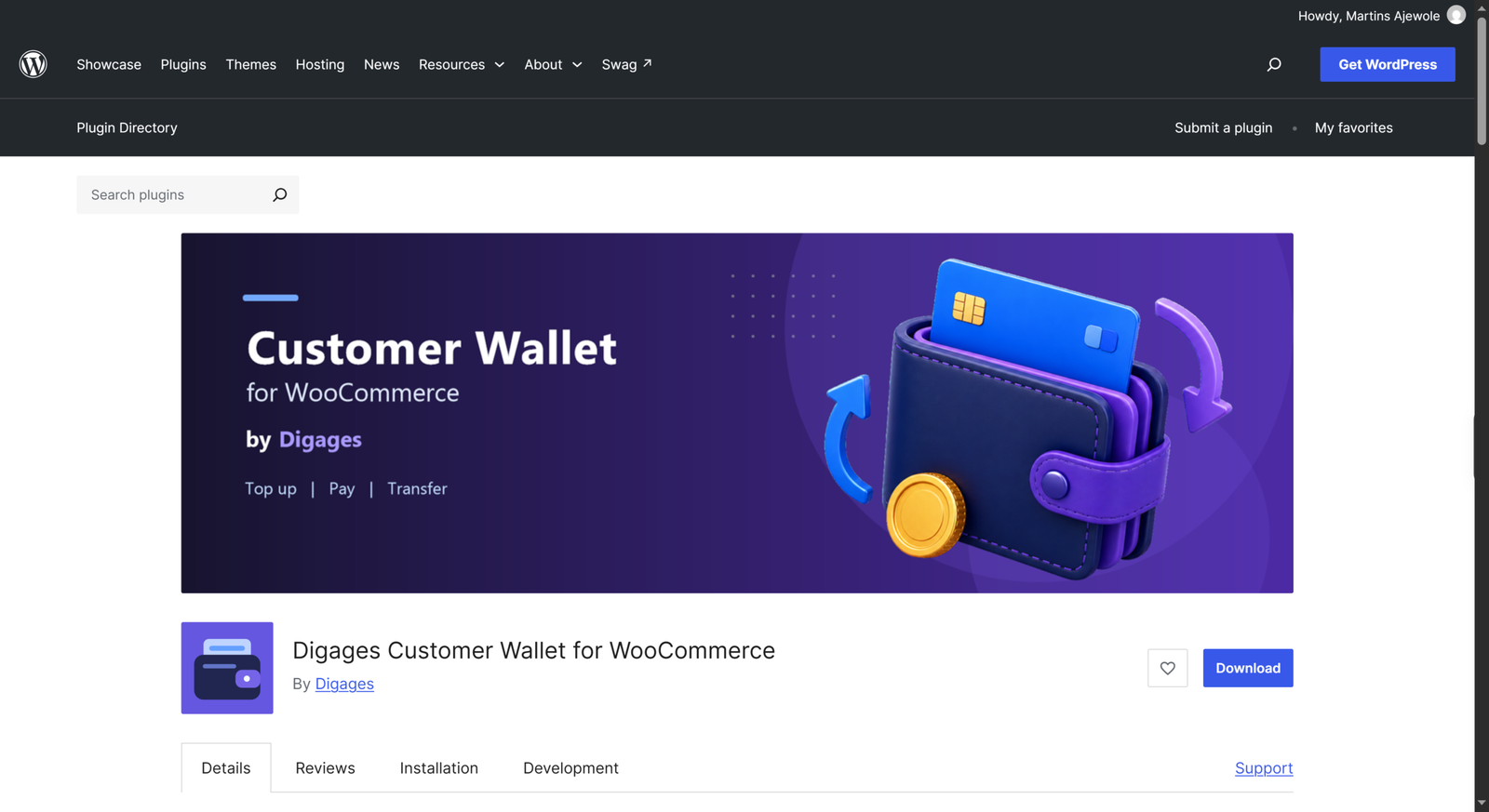
Digages Customer Wallet for WooCommerce puts several of these mechanisms in a single plugin, so you can test different mixes without stitching tools together.
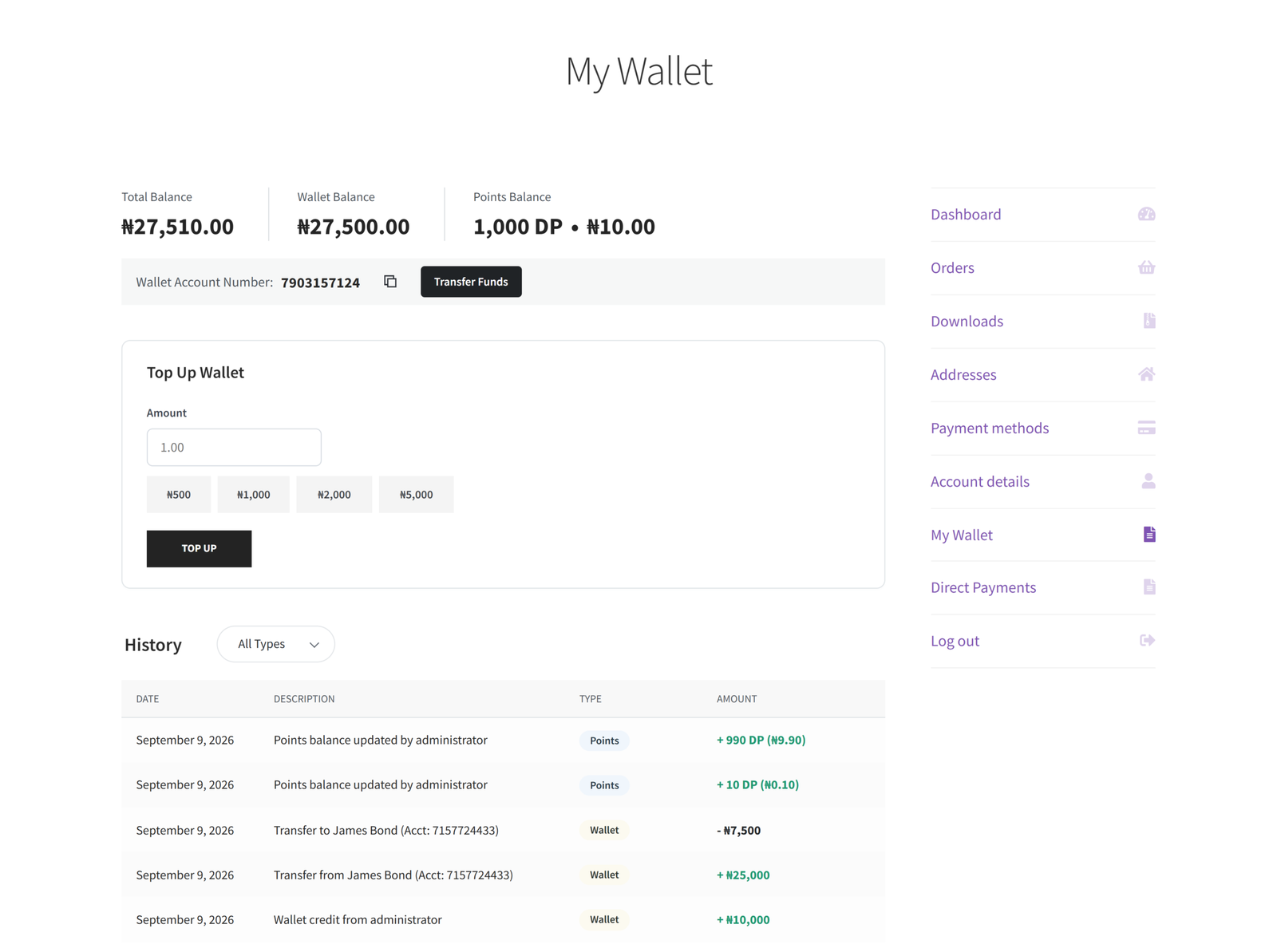
- Loyalty points: Customers earn points from paid orders and redeem them for discounts on later orders. You can configure earning and redemption rates, limits, taxes, labels, and customer-facing messages.
- Wallet funds and store credit: Customers can top up their wallet through the standard WooCommerce checkout, and you can credit wallets for promotions, bonuses, compensation, or refunds.
- Wallet payments: Customers can pay for an order with wallet funds, or apply part of their balance and pay the rest through another gateway.
- Customer dashboard: A Wallet page under My Account shows balance, points, and transaction history, so customers can see what they have.
In practice, a store could offer points on regular purchases, use wallet credit for one-off gestures, and keep discounts for planned campaigns. Points redemption applies the maximum eligible points to the order, so it is worth explaining that clearly in your store messaging.
Questions to Ask Before You Decide
Rather than picking a winner, answer these for your store:
- What are your margins? Thin margins favour reward designs where you control cost.
- How often do customers realistically buy? Frequent buying suits points; infrequent buying may suit simpler offers.
- Who are you trying to reach? New visitors, first-time buyers, and loyal customers each need something different.
- What behaviour do you want? A first order, a second order, a bigger basket, or a review?
- Can you manage the complexity? A simple program that runs well beats an ambitious one that is neglected.
Conclusion
Discounts are fast and clear, but they cost margin and can teach customers to wait. Loyalty points are slower to build, but they reward the behaviour you want and give people a reason to return. Store credit adds a third option that sits between them. The best approach is usually a deliberate mix, tested against your own numbers, with each tool doing a specific job.
Ready to add a Customer Wallet for WooCommerce to your E-Commerce store?
Get Digages Customer Wallet for WooCommerce on WordPress and give your customers a simpler, more flexible way to manage their payments.